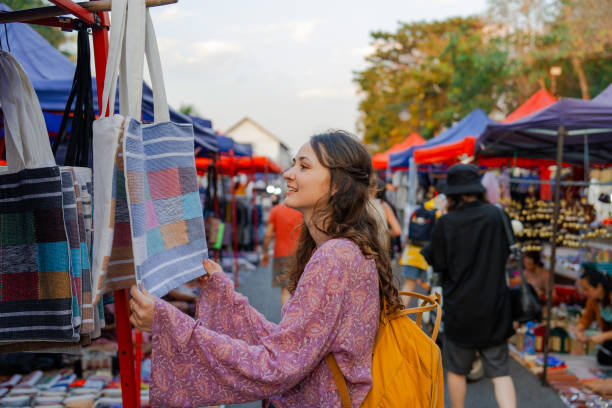
The Missing Link Between Event Customers and Repeat Customers
Think back to your last event, or even your last really great event. The weather was perfect. Not too hot. Not too cold. The event was busy with lots of people stopping at your booth, and even lots of people buying from you. Many of the people who stopped by had really nice things to say about your products. You couldn't have asked for a better event.
Do you have that image in mind?
When the event ended, you were really up and encouraged as you packed up to go home. And even for a few days afterwards. But ... the euphoria of the great event begins to dissipate, and it's almost like it never happened. And it's on to the next event. To start all over again.
I'm guessing this cycle feels familiar to you.
Successful events create sales, but they don't always create momentum in your business. The challenge isn't attracting customers to your booth. The challenge is staying connected with those customers after the event is over.
The Customer Connection Gap
When someone stops by your booth, even if they don't purchase from you that day, the relationship is just beginning. They've discovered you and your products.
They may buy from you or take your business card, thinking they'll buy later. For sure if they buy from you they've decided to spend their money with you and they've demonstrated some trust.
But, what happens next? For many artisan businesses, nothing happens next. The customer leaves with their purchase or the business card. The business owner packs up and starts thinking about the next event.
The connection made that day starts to fade and eventually disappears. I argue within a couple of weeks at most, likely sooner. The customer who made a purchase still loves what they bought, and they may want to buy again. And the person who took your card still may have good intentions of looking you up.
Yet, life happens. The customer gets busy with work and family and weddings and graduations and holidays and on and on. They've misplaced your card. They can't remember your social media. And in many cases, they can't even remember your name.
It's not you. It's life.
Why Social Media Isn't Enough
Perhaps you're thinking, "But I have my QR code to follow my Facebook page or my Instagram profile."
That's a place to start, and social media can be a valuable tool. It helps to share new products, upcoming events, behind-the-scenes content, and special announcements. Even a "day-in-the-artisan-life" moments.
The reality is that social media platform algorithms control who sees your content. If you're running a business page or profile, you've seen the number of people who actually see and respond to your content. You may have thousands of followers, yet only a very few actually see your posts. Even customers who genuinely enjoy your products may never see many of your posts.
If you're relying almost entirely on social media to stay visible, you should consider that your business is likely to fade from your customers' view until they see you again at the next event, if they attend.
This is the social media visibility problem.
It's not your great products. It's not your super posts. It's the way the platforms function.
Repeat Customers Start With Relationships
Think about how you shop, and the businesses that you personally frequent. Maybe it's a local restaurant, your favorite coffee shop, or a small boutique. You don't return because you remember they exist; you return because you have a relationship with the business.
The business stays visible. You drive past their storefront. They send you a coupon in the mail. You see their advertisement in the local newspaper. You've signed up for their rewards program, and they send you information about their new products. They stay top-of-mind for you and remain part of your world.
This same principle applies to artisan businesses. When customers remain connected to your business, opportunities for future purchases naturally increase.
What Connection Looks Like
Staying connected isn't about being annoying. We've all experienced "spam" and so there's a natural inclination to avoid ongoing connection with customers because we don't want to be perceived as being intrusive or annoying. It's a natural fear of not wanting to be seen as a "spammer".
But staying connected doesn't mean you have to send constant promotions or marketing messages every day. A simple communication strategy can be effective.
For example:
Announcing upcoming events
Sharing new products
Showing works in progress
Sharing seasonal collections
Offering special customer promotions
Providing behind-the-scenes updates
These simple, periodic communications help your customers to keep your business top-of-mind and remember you.
The Real Opportunity
As an artisan business owner, you likely spend an enormous amount of time and resources trying to attract new customers at events. And new customers are absolutely important. But if you're letting them walk away without a way to connect after the event, that you control, then you are literally starting over at every event.
Every event creates an opportunity to build relationships with customers that you've already earned. The businesses that grow consistently aren't necessarily the ones attending the most events. In many cases, they're the businesses that do a better job of staying connected with customers they already have.
A Different Way to Think About Growth
So here's a different perspective than what you may have had to this point. Let's do some imagining again.
Imagine that great event from the beginning of this post. All the great people. The super sales day. Got it in your mind's eye?
So that day generated really great sales for your business. Imagine for each customer you served, you also got their email address. Imagine that for the many compliments you received from people who didn't buy, you received their email address. Now hold that thought.
Imagine a few days later, you sent them a welcome email. And, then maybe a few weeks later, you sent them a day-in-the-life of making your products email. Then a few weeks later you sent them a special email about where you're going to be next. And a few weeks later you're excited about your newly developed product, and you send them an email about that.
Your customer isn't annoyed by your emails. They're happy to keep hearing from you and remembering you. And, when they're ready to buy what you sell, you've remained connected. You've built a relationship.
Now imagine, they need a gift for a friend, or they want to add to their collection. They look you up and buy from you again.
Why? Because you remained part of their world.
Thoughts, comments, or questions you'd like to share with me? Get In Touch


